
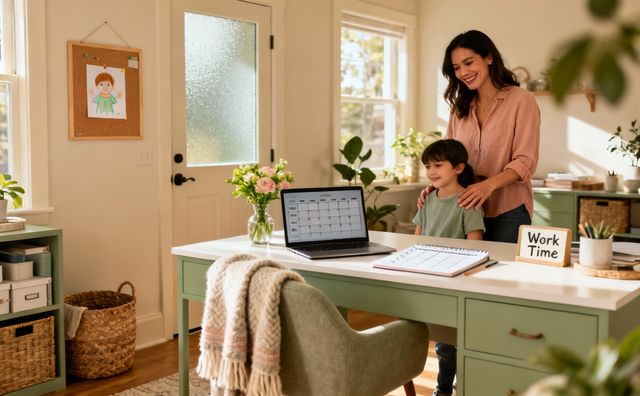
Home Office Balance: Designing Spaces for Focus and Family
Create a productive workspace that respects home life and boundaries.
Overview: Why I Care About Home Office Balance
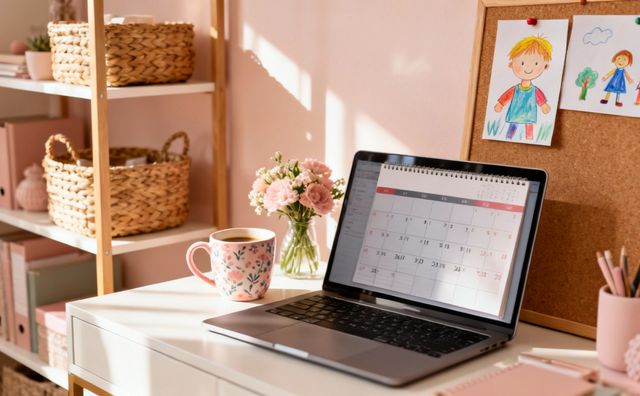
When I talk about 'home office balance,' I mean creating a special spot in your
house that helps you get your work done while still feeling like a warm and
happy home. It's more than just putting a desk in a corner; it's about designing
a space that lets you focus on your job but also makes it easy to switch back to
being a wife and a mom. This space should support your professional duties
without taking over your family's life, making sure each one gets the attention
it deserves.
As a mother of two wonderful children, a son and a daughter, finding this
balance is not just a nice idea, it's essential for my family's happiness and my
own peace of mind. Before I set up my workspace properly, I felt like I was
always caught in the middle, never fully focused on my work and never fully
present with my family. Creating a dedicated office space allowed me to be a
better employee and, more importantly, a more attentive wife and mother,
protecting our precious time together.
In this article, I'm excited to share the simple, practical steps that helped me
create a workspace that truly works for my family. We will walk through
everything from choosing the right layout and decor to setting clear boundaries
with your loved ones. I'll also give you my best tips for storage, technology,
and creating daily routines that help you smoothly transition from your
professional life to your family life.
Background and Big Picture: How Home Work Shapes Family Life
When I first started working from home, our daily life got turned upside down,
and the lines between my job and my family became very blurry. My laptop was
always on the kitchen table, and work calls would interrupt our playtime, which
made it feel like my job was invading every part of our home. It changed the
whole rhythm of our day, and it was hard to feel like our home was a restful
place anymore.
The emotional side of this was tough, and I felt a lot of stress when my work
things were scattered all over our living space. It felt like I could never
truly clock out and just be a mom, which left me feeling anxious and
overwhelmed. But once I created an organized and separate workspace, I felt a
huge wave of relief. Having that order made me feel like I could finally breathe
and take control of my day again.
On a practical level, a messy and undefined workspace led to a lot of problems,
like losing my focus every few minutes. My kids would naturally want my
attention, and important tasks were constantly interrupted, making me feel
unproductive. This meant I wasn't giving my best to my job, and I also wasn't
having quality, focused time with my children, which made me feel guilty.
Working from home is a wonderful blessing because it saves so much time and
money on commuting and lets me be here for my family. However, without clear
systems and a dedicated space, the flexibility can turn into feeling like you
are working all the time. Setting up a real home office helps you enjoy the
benefits of remote work without letting it burn you out.
Please remember to be kind to yourself through this process, because finding the
right balance doesn't happen overnight. It took me time and some trial and error
to figure out what worked best for me and my family. This is a journey of making
small adjustments over time, and the goal is progress, not perfection. Many of
us are still learning as we go.
Plan the Layout: Zones for Focus and Family
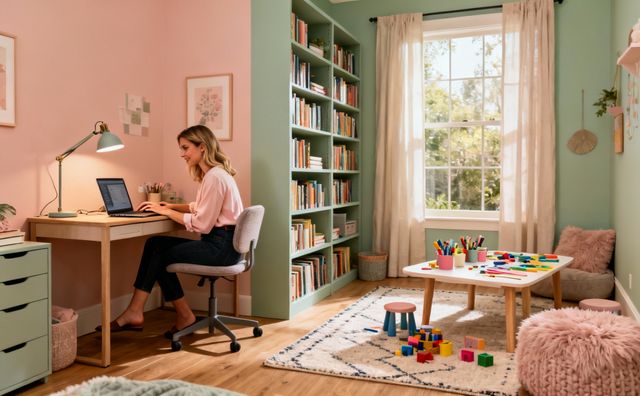
One of the best things I did was to divide our multi-purpose room into clear
zones for different activities. I have my dedicated work corner, a small area
with a soft rug and a basket of quiet toys for the kids, and the rest of the
space is set up for us to relax as a family in the evenings. This helps everyone
understand what the space is for at different times of the day and keeps things
feeling orderly.
I thought carefully about where to put my desk to manage sight lines and
minimize distractions. I positioned it so that I can easily see the doorway and
glance over at my children in their play corner, but I'm not facing the main
area of activity. This arrangement gives me peace of mind that they are safe,
while still allowing me to focus on the screen in front of me.
To create a sense of separation, I used a piece of furniture to act as a gentle
divider between my work area and the rest of the room. A simple, low bookshelf
did the trick perfectly. It visually separates the space without closing it off
completely, sending a clear but friendly signal that one side is for work and
the other is for play.
Lighting also plays a huge role in setting the mood and signaling a change in
how the room is used. For my work zone, I have a bright task lamp that I only
switch on when I'm working. When the workday is over, I turn it off and we use
the softer, warmer floor lamps for our family time, which helps us all wind down
and relax.
Design for Focus: Furniture and Flow
When you're picking a desk, think about the kind of work you do every day and
choose a size that makes sense for your needs. In my old real estate job, I
handled a lot of paperwork and needed a large surface, but now I primarily use
my laptop. A smaller, more compact desk is perfect because it gives me enough
space without taking over the entire room.
I cannot say enough about how important it is to choose a comfortable, ergonomic
chair. Sitting for hours in a bad chair can cause so much back and neck pain,
which makes it hard to focus. I decided to invest in a good quality chair with
proper support, and it has made a world of difference in my ability to work
comfortably for longer periods.
To keep my desk tidy, I organize all my supplies based on how often I use them.
The things I need every single day, like a pen and my notebook, are right on my
desk within arm's reach. Items I use weekly, like certain files, are in the
drawer right beside me. This simple system prevents clutter from building up and
helps me find what I need quickly.
I created a small 'quick-launch' area on the corner of my desk to hold my daily
essentials so I can get started without any fuss. This little station has a
stand for my phone, its charger, and a small, pretty tray for my keys and
favorite pen. It keeps my most important items in one place, so I am not
scrambling to find them when I need them.
Decor that Calms: Colors, Textures, and Feminine Touches
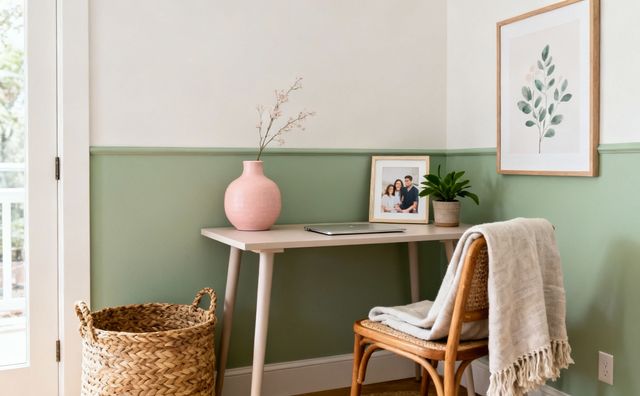
For my office decor, I chose a soothing color palette to create a calm and
peaceful atmosphere, which helps me stay focused even on stressful days. I used
soft greens, warm neutral tones like beige, and a few blush pink accents to give
the space a gentle and feminine feel that I love. It feels more like a retreat
than a corporate office.
To make the space feel cozy and welcoming, I added a variety of textures through
different decor items. I have a soft throw blanket draped over my chair for
chilly mornings, some beautiful woven baskets for storage, and my desk has a
natural wood grain. These small details make the office feel like a natural part
of our home.
A few well-chosen pieces of art and some simple houseplants bring so much life
and personality to the room without creating visual clutter. I was careful not
to overdo it, because a busy space can be very distracting. Just two or three
items that make me happy were enough to make the space feel inspiring and
cheerful.
With two little ones running around, I knew that all the materials in my office
area had to be easy to clean. My desk has a smooth surface that wipes down
easily, I chose a durable fabric for my chair, and the rug is stain-resistant.
This practicality means that a little spill is just a small cleanup, not a major
disaster.
I believe in adding a few small personal touches to make a workspace feel like
your own, but it is important to keep them limited to avoid distraction. I have
a favorite mug for my tea and a single framed photo of my husband and our kids
on my desk. These simple things bring me joy and remind me of my purpose without
cluttering my mind or my space.
Set Boundaries: Signals, Schedules, and Family Rules

My family and I have agreed on some very clear signals to show when I need to
focus and cannot be disturbed. A closed door is the most important one, but if
the door is open, wearing my big headphones is the signal that I am in 'deep
work' mode. These simple, visible cues are easy for even my young children to
understand and respect.
To help my kids know what to expect from our day, I put a simple family schedule
up on the refrigerator with pictures. It shows my main work blocks in one color
and my available 'mommy time' blocks in another. This helps them see when I'll
be free to play or get them a snack, which reduces interruptions and meltdowns.
I've learned to set short buffer times for myself around my work calls and
meetings to help me switch gears. I take ten minutes before a meeting to quiet
my mind and prepare, and I take another ten minutes afterward to jot down notes
and transition back into family life. This little pause helps me be fully
present for whatever is next.
I have taken the time to teach my children age-appropriate rules for when they
can interrupt me, such as for an emergency. We have practiced what to do, like
knocking softly on the door. When they follow these rules and wait patiently, I
make sure to give them lots of praise and a big hug. This positive reinforcement
encourages them to respect my work boundaries.
Storage & Organization: Systems that Reduce Stress
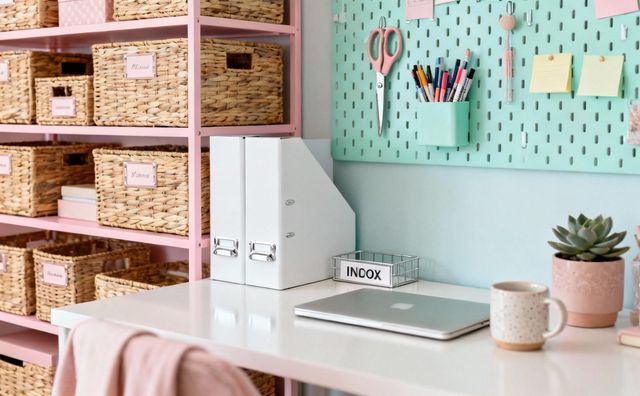
To keep our shared space organized, I use separate, labeled bins for the kids'
craft supplies so they don't get mixed in with my work items. I used simple
picture labels so even my youngest knows where the crayons and paper go. This
makes cleanup time quick and easy, and it teaches them to be responsible for
their own things.
On my desk, I keep a single tray that acts as my 'inbox' for any new papers,
mail, or notes that need my attention. This prevents random papers from piling
up all over my workspace. I make it a habit to go through this tray at the end
of each day, so I can start fresh the next morning with a clear desk.
In a smaller room, using vertical storage is key to maximizing your space and
keeping the area from feeling cramped. I use tall, narrow bookshelves and a few
wall-mounted shelves to hold my books, binders, and supplies. This strategy
keeps the floor clear and makes the whole room feel more open and organized.
Every Friday afternoon before I sign off for the week, I follow a simple 'reset'
routine to get the room ready for the weekend and the week ahead. I spend about
fifteen minutes filing papers, tidying my desk, and wiping everything down. This
small habit ensures that I can walk into a clean and work-ready space on Monday
morning.
Tech and Comfort: Tools that Protect Focus and Body
I decided early on to invest in good, reliable technology because dealing with
tech problems is incredibly stressful and unprofessional. I bought a good
quality webcam and microphone and made sure our home had a strong wifi signal.
This investment has paid off by making my video meetings run smoothly and
without frustrating glitches.
Looking down at a laptop screen all day can be really bad for your posture and
cause a lot of neck pain. To fix this, I got an external monitor and set it up
at eye level. If you don't have a monitor, even a simple laptop riser or a stack
of books can lift your screen to a much more comfortable height.
Our home can be a noisy place, especially with energetic children, so managing
sound is important for my concentration. For times when I need absolute quiet, I
use a good pair of noise-canceling headphones. Other times, a simple white-noise
machine does a great job of masking background sounds and helping me focus.
Sitting still for too long is not healthy, so I make sure to schedule short
movement breaks throughout my workday. I set a timer to remind me to get up
every hour to stretch, walk around the house, or grab a glass of water. These
little breaks help reset my body and my mind so I can return to my desk feeling
refreshed.
Transition Rituals: End-of-Day Routines to Close Work

At the end of my workday, I follow a short and simple ritual to help my brain
understand that it's time to switch off from my job. I take a few minutes to
tidy my desk, I write out my to-do list for the next day, and then I turn off my
bright task lamp. This little routine is a clear signal that my professional
duties are done for the day.
To create an even stronger boundary between work and home, I use a physical
action to mark the end of my day. For me, the simple act of closing my laptop is
a powerful signal. Sometimes I also drape a pretty scarf over my monitor, which
covers the screen and reinforces the idea that the office is now 'closed'.
After I've finished my work routine, I make it a priority to reconnect with my
kids through a small evening tradition. This could be reading a favorite bedtime
story together, sharing a special snack, or singing a silly song. This dedicated
time helps us connect right away and shows them that they now have all of my
attention.
I have learned to give myself some grace on the days when things don't go as
planned and work runs longer than I expected. True balance is not about
achieving perfection every single day. It's about making steady progress and
having good routines in place most of the time, and not being too hard on
yourself when life happens.
Small Spaces & Shared Rooms: Creative Solutions
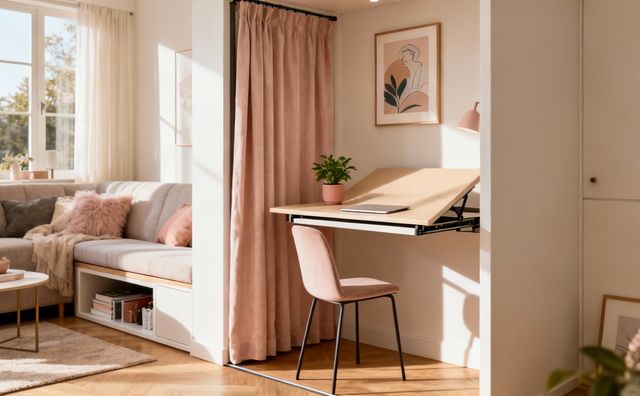
If you are working in a very small home without a dedicated office room, there
are wonderful fold-away desks that can be a perfect solution. You can find
workstations that mount to the wall and fold down when you need them, and then
fold back up to look like a small cabinet. This allows you to have a functional
desk that completely disappears at the end of the day.
Choosing furniture that can serve more than one purpose is a smart strategy for
any small space. For example, you can get a stylish ottoman that also opens up
for storage, which is great for hiding away work supplies or kids' toys. A
simple dining table or a sturdy console table can also double as a desk during
work hours.
You can create strong visual boundaries to make a workspace feel like its own
separate room, even when it's just in the corner of your living room. Placing
your desk and chair on top of a distinct area rug helps to define the 'office'
zone. You can also hang a lightweight curtain from the ceiling that you can pull
closed for privacy.
Finding privacy for important calls can be one of the biggest challenges in a
small or open-plan home. A portable folding screen can be a great tool to block
some background distractions and create a more professional-looking backdrop.
And in a real pinch, I have learned there is no shame in taking a very
important, private call from the quiet of my parked car.