

Wedding Day Timeline Templates: Stress-Free Schedules
Organize Your Celebration for Smooth Flow and Joy
Why a Wedding Day Timeline Matters — background and implications

When I talk about a wedding day timeline, I simply mean a written plan that
shows what happens, when it happens, and who needs to be where from the moment
you wake up until the last dance, and it matters for every bride because it
turns a big, emotional day into a clear, peaceful path you can actually enjoy
instead of manage hour by hour. A good timeline covers everything from hair and
makeup to ceremony start time, family photos, dinner, speeches, cake cutting,
and your exit, so you are not trying to remember details while you are in your
dress. Without a timeline, small delays can snowball into big problems that
steal time from your photos or push dinner late, which makes guests restless and
vendors rushed. With one, you know where you are in the day at a glance, you
feel more in control, and you can relax and soak in the joy God has given you in
this season of your life.
A clear schedule reduces stress because it pulls everything that is floating in
your head into one simple document that vendors, family, and the wedding party
can all follow so they stop asking you constant questions. When everyone knows
what time hair starts, when the photographer arrives, when you need to leave for
the church, and when speeches begin, there are fewer surprises and less chaos in
the background. Your vendors can plan their work, your family knows when to be
dressed and ready, and your bridesmaids and groomsmen have clear call times so
they do not wander off at key moments. This shared understanding keeps people
from crowding you with last minute decisions, so instead of feeling like a
project manager, you can just be a bride and enjoy your husband, your guests,
and the celebration.
A thoughtful wedding timeline has very real results such as better photos, an on
time ceremony, calm prep time, and happier guests who feel cared for. When
photos are planned into the schedule with real time assigned, I know from my
photography days that you get relaxed, natural images instead of rushed smiles
and missing family members. An on time ceremony shows respect for your pastor,
officiant, and guests, and it keeps the rest of the night on track so dinner is
served when people expect it. Calm prep time means you are not racing through
hair and makeup; instead you have room to breathe, eat a little protein,
hydrate, and enjoy your bridesmaids, which sets a peaceful mood for the rest of
the day. Guests are happier when they are not waiting long for food or wondering
what comes next, and their good mood feeds right back into the joyful feeling of
the whole event.
Planning your wedding day timeline is also about guarding the emotional tone of
the day so you can stay present with your new husband, your family, and with the
Lord in quiet moments. When there is a plan, small delays feel manageable
instead of like disasters, which keeps everyone calmer and more gracious. This
calm allows you to notice the important things such as your dad’s face when he
sees you in your dress, your husband’s eyes at the altar, and the sound of your
loved ones worshiping or praying if you include that in your ceremony. By
choosing in advance where you will pause for a private prayer or a few moments
alone as a couple, you protect your heart from being pulled in a hundred
directions. The timeline becomes a fence that keeps stress and confusion out so
peace, gratitude, and joy can fill the space instead.
How to Choose the Right Template for Your Day

There are a few common template formats you can use for your wedding day
timeline, and each one works a bit differently depending on how your brain likes
to organize things. An hour by hour timeline lists every key item by clock time,
such as 9:00 hair starts or 3:00 ceremony begins, which works well if you like
detail and want to see the whole day clearly. A block schedule groups parts of
the day into chunks such as Getting Ready, Ceremony, Cocktail Hour, and
Reception, and then shows the smaller tasks inside each block without listing
every single minute. A checklist driven timeline focuses more on order than time
and uses check boxes beside each step so you or your planner can mark items
complete as the day moves forward, which is helpful for people who get
overwhelmed by exact times. You can start with any of these templates and then
shape them to fit your wedding.
When I choose a timeline template, I always think about the wedding size and
formality because those two things change how much structure you need. A small
backyard wedding with thirty guests and a simple dinner often does well with a
relaxed block schedule, since you do not have a lot of moving parts or formal
traditions. A large ballroom reception with two hundred guests, a full plated
meal, speeches, cake cutting, and a sparkler exit usually needs an hour by hour
plan so the caterer, band, and photographer can all stay synced. More formal
events often involve tighter rules from venues and churches, so you must write
those rules into the timeline to avoid conflicts. Matching your template to the
style of your day keeps the schedule from feeling either too strict or too
loose.
Before you settle on a template, you should check how flexible it is for vendor
timing and photo needs, because those are the areas that move the most in real
life. Your photographer may need dedicated time for detail shots, first look
photos, and family portraits, and those windows must be visible and protected in
the timeline or they will be eaten up by other tasks. Hair and makeup teams also
work on a schedule, and if your template does not show when each person sits in
the chair, you may run late before the day even really begins. Make sure your
template has space for travel time between locations, vendor arrival and setup,
sound checks for musicians, and any special moments like a father daughter first
look. When a template can flex to hold all this information without becoming a
mess, you know you have chosen the right format.
Sample Timelines for Different Wedding Sizes and Styles
When I design a flow for a wedding, I start by looking at the size of the guest
list and the style of the reception because a small, intimate wedding moves very
differently than a large event. For a tiny celebration with close family, you
might keep the schedule simpler with a relaxed getting ready time, a short
ceremony, a quick set of family photos, and then a long shared meal where you
are free to mingle and talk without a lot of formal events. For a big reception
with many guests, you need to plan out cocktail hour, a grand entrance, toasts,
special dances, and maybe a cake or dessert moment so that guests are not left
waiting or confused. Intimate weddings can allow more flexible blocks and longer
conversations, while large weddings usually benefit from tighter timing and
clear announcements to guide the crowd. Both can be beautiful when the flow
matches the size and feel of the day.
Timelines also differ a lot depending on whether you have a religious ceremony,
a civil wedding, or a destination event. A church ceremony that includes
Scripture readings, worship songs, or communion often takes longer than a quick
civil ceremony at a courthouse or garden, and many churches have set windows for
when you can be in the building, so that must go into your schedule. Civil
ceremonies can be shorter and more flexible, which may give you extra time for
photos or a relaxed cocktail hour afterward. Destination weddings add travel,
shuttle times, and sometimes welcome dinners or group outings that stretch the
timeline beyond a single day. By noting what type of ceremony you are having,
you can give the right amount of time to the service itself and honor the
meaning behind your vows instead of rushing through.
No matter the style, some time blocks are almost always needed, and it helps to
plan them with realistic lengths in mind for cocktail hours, family photos, and
vendor setup. Cocktail hour usually runs about 45 to 60 minutes, which gives
your photographer time to take couple portraits and some family shots while
guests enjoy drinks and small bites. Family photos take longer than people
expect, especially if you have a big family or blended families, so I like to
plan at least 30 minutes, sometimes more, and I make a written list of the
groupings so we move quickly. Vendor setup for things like flowers, sound
equipment, and decor often starts several hours before guests arrive, and that
window needs to be clearly marked so vendors are not trying to set up while
guests are walking in. When these blocks are thoughtful and generous, the whole
day feels smoother and less rushed.
Cultural traditions and multi day events can stretch and reshape your timing
needs, so they must be part of your planning from the start. If your family
includes special customs such as a tea ceremony, a blessing circle, or a
traditional dance, you should treat those like major timeline anchors rather
than small add ons so they receive the time and respect they deserve. Multi day
weddings that include a rehearsal dinner, welcome party, or post wedding brunch
call for a simple timeline for each day, even if it is short, so guests and
vendors know where to be and when. These added elements can be rich and
beautiful, but they also add to travel, outfit changes, setup needs, and
emotional energy. Writing them into your plan protects them from being squeezed
and lets you honor your heritage and your families in a peaceful way.
A Practical Hour-by-Hour Sample Timeline (example)

To help you picture what this looks like, I like to walk brides through a
realistic 10 hour sample timeline that runs from getting ready to the last
dance, which you can then adjust to your own day. For example, you might start
at noon with hair and makeup, 2:00 for getting dressed and detail photos, 3:00
for first look and couple portraits, 4:00 for ceremony, 4:30 to 5:30 for
cocktail hour and family photos, 6:00 for reception entrance and dinner, 7:30
for toasts and special dances, 8:30 to 9:45 for open dancing, and 9:45 for your
grand exit. This kind of sample is not a rule but a framework that shows where
the natural rhythms of the day can fall. You can move the start time earlier or
later depending on your season, church rules, and sunset time, yet the same
basic shape usually holds.
From my years as a photographer, I always marked key photo windows and buffer
times in bold because those minutes vanish fast if they are not protected. I
like to reserve at least 45 minutes for a first look and couple portraits so you
can relax and not feel rushed, plus 30 to 45 minutes for family photos with a
written list of groups in order of importance. I also try to leave a little ten
minute gap after the ceremony where you and your husband can breathe before
diving into group pictures or greeting guests. During golden hour, which is
usually the last hour before sunset, I plan another 10 to 20 minutes for a few
quiet photos of just the two of you in soft, warm light. These planned windows
give you a mix of formal and candid images that feel calm and natural instead of
hurried.
To make this work on the day, I add simple notes in the timeline about what to
tell your photographer, planner, and family at each hour. For example, at
getting ready time I note when the photographer should arrive and which details
should be ready such as rings, shoes, invitation, veil, and bouquet. Before the
ceremony I include who will help gather family members for photos and who will
guide grandparents and parents to their seats. At the start of the reception I
list when the DJ or band should announce your entrance, when toasts will happen,
and when your planner should check with the kitchen. These little instructions
save you from constant questions and help the people who love you to support you
without guessing.
I am a big believer in building in 15 to 30 minute buffers throughout the day so
things stay on track even when real life happens, because it always does. Hair
and makeup often run a bit over, traffic can slow down travel, and guests
sometimes arrive late, especially if they are not familiar with the area. By
placing small cushions before major moments like the ceremony and the reception
entrance, you create a safety net that keeps you from losing the flow of the
day. These buffers also give you breathing room for unexpected sweet moments
such as a prayer with your parents or a spontaneous laugh with your bridesmaids.
It is much better to finish something early and have a few quiet minutes than to
feel like you are sprinting all day.
I like to include a short checklist at the end of the timeline that you can
print and hand to vendors, with only the most important items they need to see.
This vendor checklist might list arrival times, setup and sound check windows,
key event times such as ceremony start and dinner service, and contact numbers
for the planner or main point person. Keeping this checklist simple means your
florist or DJ does not have to hunt through a long document to find their key
information. You can print several copies and keep one in your bag, one with
your maid of honor, and one at the venue. A clear checklist like this often
prevents last minute scrambles and keeps everyone moving in unity.
As a bride, you also need space for your soul in the middle of all this, so I
gently remind you to add time in your timeline for breathing, prayer, or a quiet
moment with your new husband. You can mark a five or ten minute pause in your
schedule just before you walk down the aisle to pray with your parents or your
pastor. Later, you might plan a short break after dinner where you and your
husband step away from the crowd, hold hands, and thank God together for the
gift of your marriage. These little pauses help you remember that your wedding
is not just an event; it is a covenant before the Lord and the start of a new
home. Protecting that spiritual and emotional space is just as important as any
photo or meal time.
Tools, Apps, and Printable Templates I Recommend
You do not need fancy software to manage your wedding day schedule; simple tools
like printable PDFs, spreadsheets, and timeline apps that sync with phones work
very well. A basic spreadsheet lets you list times in one column, events in the
next, and notes or contacts in another, and you can color code sections for
getting ready, ceremony, and reception. Once it looks the way you want, you can
save it as a PDF and print copies or share it by email. Some couples like to use
planning apps that send reminders and can be opened on any phone, which is great
for tech friendly families. The key is choosing a tool you feel comfortable with
so you actually use it, rather than something so complex that you avoid updating
it.
I usually recommend sharing one full timeline PDF with vendors and then creating
a simplified version for family and the wedding party so they only see what they
truly need. Your florist does not need to know the exact moment of your first
dance, and your grandparents do not need to see every vendor arrival time. A
shorter family version might show when they should be dressed and ready, where
they need to be for photos, and the main ceremony and reception times. This
keeps people from getting overwhelmed with too much detail and reduces the
number of questions you receive. The master timeline can stay with your planner,
photographer, or main helper who handles the deeper information.
To avoid last minute scrambles and lost emails, I like to keep all vendor
contracts and the master timeline in one shared cloud folder that both you and
your fiancé can reach. You can make simple folders by category such as
Photography, Venue, Catering, Music, and Ceremony, and then store signed
contracts, contact information, and updated timelines there. When a vendor has a
question, you can pull up the documents on your phone instead of digging through
a crowded inbox. If you are traveling for a destination wedding, this is even
more helpful because you are not depending on paper copies in your luggage. A
well organized digital folder is a quiet kind of peace that you will be thankful
for on the wedding day.
Vendor, Wedding Party, and Family Coordination Checklist

When you are ready to share the timeline, it helps to decide in advance who gets
the full master version and who receives a simplified copy so people only see
what they really need. The master timeline usually goes to your planner or
coordinator, photographer, videographer, venue manager, caterer, DJ or band
leader, and anyone else handling major parts of the day. Your parents and maid
of honor may also appreciate the full version if they are helping manage
details. Bridesmaids, groomsmen, and most family members usually do better with
a short one or two page summary that covers where and when they need to be
throughout the day. This approach keeps things clear without drowning your loved
ones in information.
When you confirm arrival and setup times with vendors, you can use a simple
script that makes the conversation easy and clear. For example, you might say,
“Hi, this is Anna, my wedding is on June 15 at Grace Church. I have you arriving
at 2:00 p.m. for setup and we need everything ready by 3:30 p.m. for guest
arrival. Does that still work for you, and is there anything you need from us
before then?” This kind of wording shows respect for their time while clearly
stating your expectations. You can follow up with an email that includes the
timeline PDF and ask them to reply confirming they have received it. Writing
this down keeps everyone accountable and avoids confusion on the day.
To keep the wedding party informed without overwhelming them, I suggest giving
them a short timeline at the rehearsal or in a group message that covers only
the most important points. They mainly need to know what time to arrive dressed
and ready, when photos with them will happen, and where they should be just
before the ceremony and the grand entrance to the reception. You can also
mention any special roles like who holds the rings, who helps gather family for
photos, or who is in charge of your phone and emergency kit. If there are
changes on the day, one trusted person can update the group instead of everyone
texting you. This keeps your phone quiet and your mind focused on the joy of
marrying your husband.
As you distribute timelines, do not forget to include a small note that lists
emergency contacts and any important dietary notes for vendors and close family.
Emergency contacts might include your planner, the venue coordinator, the best
man, the maid of honor, and a parent, so vendors have more than one person they
can reach if something comes up. If you or any close family members have
allergies or strict dietary needs, share that briefly with your caterer, baker,
or whoever handles food so they can prepare safely. You can also note if your
catering team needs to provide a gluten free or dairy free vendor meal or if you
are bringing your own paleo friendly snacks to keep your energy steady. These
little details show care for the people serving you and protect the health of
those you love.
Morning-of Tips for Brides: Staying Calm and Confident

Because I follow a paleo style of eating, I always advise brides to think about
nutrition and hydration before photos so they do not feel faint or foggy on such
an important day. It is not the time to skip breakfast or live on sugar, since
that can leave you tired and moody by mid afternoon. I suggest simple protein
like eggs, grilled chicken, or turkey slices along with some fruit and plenty of
water in the morning and again as a small snack before the ceremony. Keep a
water bottle nearby during getting ready time and sip often, even if you feel
busy; it really affects how you feel and look in photos. When your blood sugar
is steady and your body is hydrated, it is much easier to stay calm, present,
and joyful.
Along with physical care, I love to share small rituals that help brides stay
grounded, such as a five minute breathing exercise and a quiet prayer written
right into the timeline. Sometime during getting ready, maybe after you put on
your dress, plan a short pause where you close your eyes, breathe in slowly
through your nose for a count of four, hold for four, then breathe out for a
count of six, repeating this for a few minutes to settle your body. After that,
you might pray alone or with someone you trust, thanking God for His
faithfulness and asking Him to bless your marriage and everyone present. This
does not have to be fancy or long; it just needs to be honest and from your
heart. Many brides tell me this is the moment they finally feel the peace they
have been longing for.
There are also practical little habits that make the timeline work better and
keep the day flowing, like what you wear, what tools you keep close, and who
watches the clock. I recommend a button up robe or loose top while you get your
hair and makeup done so you do not have to pull anything over your face once
your hair is styled. Keep a mirror nearby at your getting ready spot so you can
do quick touch ups without needing to run to a bathroom. Most importantly,
assign one person who is not you to handle time checks and small schedule
decisions; this can be a planner, a responsible bridesmaid, or a sibling who is
calm under pressure. When someone else is guarding the timeline, you are free to
enjoy each moment as it comes.
Common Timeline Mistakes and How I Fix Them
When I review timelines for friends, I notice the same errors over and over such
as schedules that are too tight, no buffer for vendors, and no clear person in
charge of timekeeping. A too tight schedule leaves no room for real life, so one
small delay can throw off the whole rest of the day and increase stress for
everyone. Missing vendor buffers means your florist might be arranging flowers
while guests arrive or your DJ is still doing sound checks during cocktail hour,
which does not feel smooth or professional. If no one is assigned to watch the
clock, events can drift late until dinner is cold and guests are restless.
Seeing these patterns early gives you the chance to fix them on paper instead of
suffering through them in real time.
The good news is that these problems have quick fixes such as adding buffer
blocks, assigning a single timekeeper, and building a clear vendor contact list.
You can look at each major section of your day and add 15 to 30 extra minutes,
especially before the ceremony and reception start times. Choose one trusted
person, not a whole committee, who will quietly check the schedule and gently
move things along, so people do not debate every choice. Create a short document
or phone note listing each vendor’s name, role, and cell number, and share it
with your timekeeper and planner so they can solve problems without pulling you
in. These steps turn a fragile schedule into a strong one that can bend without
breaking.
Before you print your final timeline, I like to run it through a quick checklist
to make sure nothing important is missing. Ask yourself if every major event has
a clear time, if travel between locations is built in, and if you have allowed
for hair and makeup, photos, and meals. Check that vendor arrival times are
written down, that there is at least one buffer before the ceremony, and that
contact numbers are attached somewhere easy to find. Make sure family photo
lists are finished and tied to specific time windows. When each of these boxes
is ticked, you can feel much more confident heading into the big day.
Another key piece that many couples forget is to plan around photo lighting
windows and travel times, especially if you are moving between the getting ready
space, the church, and the reception venue. Talk with your photographer about
when the light will be best for portraits and try to place your couple photos or
part of your family photos in that window. If you want golden hour images, note
the sunset time for your date and build a small session into the timeline about
an hour before that. For travel, always assume it will take a little longer than
your map says, especially if guests are leaving a crowded parking lot or if
there is weekend traffic. Planning around light and travel keeps your day
feeling beautiful instead of rushed and dim.
To make sure all this planning actually works, I encourage couples to rehearse
the timeline with key people the day before, even if it is just a quick walk
through. At your rehearsal or afterward at dinner, you can read through the main
points with your wedding party and parents so they know the big beats of the
day. Vendors do not need to attend, but you can send them the final version and
ask them to confirm by email. This small rehearsal often reveals little gaps or
confusions you can fix that night instead of on the wedding morning. Practicing
the flow gives everyone more confidence and builds unity around your plan.
Customizing for Weather, Culture, and a Last-Minute Plan B
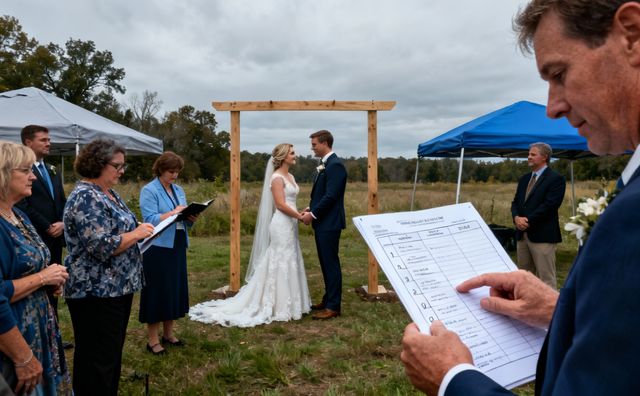
Outdoor ceremonies are beautiful, but they need some special timeline tweaks for
things like heat, cold, or rain, along with a backup plan in case the weather
turns. If your ceremony is in the hottest part of the day, consider shortening
the length of the service a little and adding more time indoors before and after
for guests to cool off. On cold days, build in extra minutes for people to grab
coats or blankets and move slower, especially older guests. You also need clear
setup windows for chairs, decor, and sound equipment since those take longer
outdoors. Writing all this into your schedule helps vendors and family prepare
for the elements rather than scrambling at the last minute.
Cultural or religious elements can add depth and beauty to your ceremony, but
they also add time, so it matters where you place them in the flow. If you
include a unity candle, communion, a tea ceremony, or special blessings from
elders, estimate how long each will take and place them thoughtfully between
readings and vows. In a Christian church service, you might have worship songs,
a message, and prayer in addition to vows and rings, so you should talk with
your pastor or officiant about expected timing. Other cultures may include
dances, songs, or gift exchanges that are better suited to the reception rather
than the ceremony, depending on your family’s customs. When you know the length
of each element, you can build a schedule that honors your traditions without
causing delays.
Because weather can change quickly, I also like to outline a simple Plan B
timeline that swaps locations and shortens transition times if you need to move
indoors. This backup schedule might keep ceremony and reception start times the
same but change setup windows, photo locations, and where guests wait before the
service. You can mark which photos will now happen under a covered area or
inside the church and which decor pieces will be skipped or simplified to save
time. Plan B does not have to be perfect; it just needs to be clear and
realistic so you can switch to it without panic. Knowing there is a backup
written down gives you peace even if the sky looks uncertain.
Once you have both your main and backup timelines, it is vital to communicate
Plan B clearly to vendors and at least one trusted family member so that
everyone can pivot smoothly if needed. A week before the wedding, send vendors
both versions and explain under what weather conditions you will switch to Plan
B, such as a certain chance of rain or strong wind. Choose a decision time, like
three hours before the ceremony, and write that into your notes so vendors know
when to expect the final call. Share the basic idea with your parents and your
timekeeper so they can help spread the word to guests if needed. Clear
communication means that even if the weather changes, the peace and joy of your
day do not have to.