
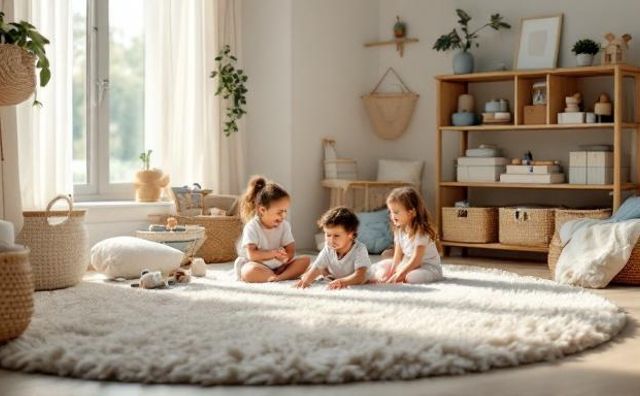
Peaceful Playrooms: Designing Joyful and Calm Spaces for Children
Balancing Fun, Learning, and Tranquility
More Than Just a Place for Toys
When I was a little girl, my bedroom corner was my whole world of play. Things
are different now, and I'm so grateful that in many homes, including my own, we
can have a whole room just for the kids' toys and games. This dedicated playroom
is a true blessing, a special place set aside from the rest of the house where
our children can just be children. It is a wonderful modern luxury that I think
helps keep the rest of the home more orderly.
A playroom is so much more than just a place to keep toys from cluttering up the
living room. It's a safe haven where my son can build towering castles and my
daughters can host elaborate tea parties for their dolls. This is the room where
their imaginations are supposed to run wild, where they learn to share and play
together, and where they make the precious memories that will shape their
childhood. I see it as their own little studio for the work of growing up.
However, I know all too well that a playroom can quickly turn into the most
chaotic room in the house. When that door opens to a floor you can't see, that
feeling of messiness can spread through our entire home and frankly, it stresses
me out. As a mother and the keeper of my home, my goal is to create a space for
my children that they find joyful, but that also gives me a sense of peace and
order. A calm home helps our whole family feel more relaxed.
The real challenge is finding that perfect balance. We want a room that
encourages creativity and isn't so strict that they're afraid to make a mess,
but we also need it to be orderly enough that it doesn't become a source of
stress for the family. It's all about creating a practical, beautiful space that
works for their playful spirits and for a parent's need for a tidy, tranquil
home.
Choosing Calming Colors and Textures

From my years as a photographer, I know that colors have a huge impact on our
mood. Super bright, loud colors like neon green or fire-engine red can be very
stimulating and sometimes make children feel hyper or overwhelmed. That's why I
chose to paint our playroom walls in softer, more gentle colors. I love shades
like a pale sky blue, a soft sage green, or a lovely warm cream. These colors
create a calming feeling the moment you walk in.
Another benefit of using these lighter, neutral colors is that they make a room
feel so much more spacious and airy. A calm background doesn't mean the room has
to be boring, not at all. It's the perfect canvas to add fun pops of color in
other ways. We have colorful throw pillows, a vibrant piece of art the kids
made, and bright storage bins that bring a lot of energy to the space without it
feeling chaotic.
I also truly believe in using natural materials whenever I can. There is a
simple, timeless beauty in things like wooden toys, a soft rug made of cotton,
and storage baskets woven from wicker. These materials are not only beautiful to
look at, but they feel good to touch and add a sense of warmth to the room. They
connect us to the natural world, and I find that connection is very grounding
and peaceful for my children and for me.
Smart Storage is a Mom's Best Friend

If there is one piece of advice I can give any parent trying to create a
peaceful playroom, it is this: get good storage. I am not exaggerating when I
say that a smart storage system is the secret weapon for keeping your sanity as
a mother. When every single toy, crayon, and doll has a designated home, it
makes tidying up a simple task instead of an overwhelming chore. It truly is the
foundation of an orderly room.
My favorite solution is using simple cube shelving units with pull-out fabric
bins. This system is a lifesaver. We have different colored bins for different
categories of toys, which makes it easy for the kids to understand. There's a
blue bin for my son's building blocks, a pink one for my daughters' dress-up
clothes, and a yellow one for all the toy cars. It turns cleaning up into a
simple sorting game for them.
For smaller items, I like to make the storage part of the decoration. We use
big, clear glass jars for things like crayons, markers, and paintbrushes. Not
only does it look really charming on the shelf, but it also allows the kids to
easily see what’s inside, so they don't have to dump everything out to find the
color they want. It’s a pretty and practical solution.
Taking the time to teach your children how their storage system works is an
investment that pays off every single day. It teaches them a valuable lesson
about responsibility and taking care of their things. When we start our daily
cleanup time, I just have to say 'Let's put everything back in its home,' and
they know exactly what to do. It builds good habits that will serve them their
whole lives.
Finally, I make sure to design the storage around them. The shelves with their
most-used toys, like the block bin and the doll basket, are on the lowest level.
This gives them the independence to get their favorite things out all by
themselves without needing my help. More importantly, it means they can also put
them away on their own, which fosters a wonderful sense of capability and
self-reliance.
Creating Different 'Zones' for Play
You don't need a huge room to create a really functional and fun playroom. A
great way to make the most of any space is to create different zones for
different kinds of play. Just like our kitchen is for cooking, having specific
areas in the playroom helps children understand what to do where, and it
naturally helps to keep certain activities contained to one spot.
In one corner of our playroom, we've created a cozy little reading nook. There
is a soft, oversized armchair, a fuzzy rug, and a few big pillows on the floor,
right next to a low bookshelf filled with all their favorite picture books. It’s
a wonderful, quiet little escape where my girls can curl up with a book and calm
down after a busy day of playing.
The center of the room is defined by a large, plush area rug. This is our main
'building zone.' The rug is soft and comfortable for playing on the floor, and
it provides a clear boundary for my son's bigger projects, like his wooden train
tracks or his giant block towers. When playtime is over, we know that everything
on that rug needs to be put back in its place.
We also have a small, kid-sized table with a couple of chairs. This is our art
and activity station. It's the designated spot for coloring, working on puzzles,
playing with modeling clay, or even having a little snack. Having a table like
this is fantastic because it keeps messy art supplies contained to one
easy-to-clean surface, protecting our floors and rugs.
A Space That Grows With Them

As any parent knows, children grow and change in the blink of an eye. Their
interests, hobbies, and needs seem to shift from one month to the next. That's
why I think it's so important to design a playroom that can easily grow and
adapt right along with them. Thinking ahead saves so much time and money down
the road.
Instead of committing to a very specific theme with permanent wallpaper, I
prefer to use large wall decals. When my son was obsessed with cars, we had car
decals all over one wall. Now that he loves space, we easily peeled them off and
replaced them with planets and rockets. It’s a simple and affordable way to keep
the room exciting for them without a major renovation project.
Furniture is another area where a little bit of forethought goes a long way. The
simple wooden table and chair set that my kids use for drawing and crafts today
is sturdy and classic enough to become a perfect homework desk when they get
older. Choosing simple, well-made pieces means you won't have to buy new
furniture every few years.
The best strategy is to keep the big, expensive items like the shelving units
and wall color neutral and simple. The personality and theme of the room can
come from the accessories. You can easily update the entire feel of the space
just by swapping out the rug, the art on the walls, the pillows, and the storage
bins as your children mature and discover new passions.